















Toca Boca













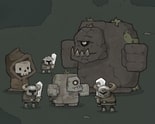

What happens when you’re handed an empty house and told to make it yours, with no objective posted anywhere on screen? That’s the opening moment of Toca Boca, either relaxing or disorienting depending on what you expected. There’s no score counter, no timer, no fail state. You click a door, a room loads, and the only task is deciding whether the couch looks better against the window or the far wall.
Rooms, Not Levels, Drive Toca Boca
The house is the whole structure here. Instead of stages or missions, Toca Boca is organized as a set of rooms you move between at will, each one holding a handful of furniture pieces, wall colors, and small decorative items you can swap in and out. There’s no unlocking mechanic tied to progress, since nothing in the house is actually locked to begin with; every room is available from the first click.
The closet screen works the same way the rooms do but applied to a character instead of a house: outfits, hairstyles, and accessories sit in a row, tried on and swapped out with no penalty for changing your mind. The furniture swap is the closest thing to a puzzle the game offers, since certain pieces only fit certain wall segments, and matching a chair to a table by sight is most of the actual thinking involved. The color picker lets you repaint walls and larger furniture on the fly, usually the first thing new players discover by accident.
What trips up first-time players is assuming that clicking around long enough will reveal a hidden goal. It doesn’t. Toca Boca is built for players who already want a sandbox house-and-dress-up experience rather than a game with an ending, and once that’s clear, the lack of direction stops feeling like a missing feature.
Why Toca Boca’s Missing Scoreboard Divides Players
Reactions to that open-ended structure split fairly evenly. Younger players and anyone treating this as a relaxed diversion tend to enjoy the total absence of pressure; there’s nothing to lose while decorating a room or picking an outfit. Players hoping for goals or progression feel the opposite, describing the experience as running out of things to do within a few minutes once the novelty of rearranging furniture wears off.
Both reactions are honest responses to the same design choice: a house you decorate and a character you dress, full stop, and whether that’s relaxing or thin depends on what a player walked in wanting from Toca Boca.
There’s also no persistent save state to speak of, so a house arranged carefully in one sitting won’t necessarily wait in that exact configuration next time the page loads, worth knowing going in. Anyone asking whether there are levels to complete or an ending to reach should treat the sandbox framing as the honest answer to both questions at once.
Toca Boca isn’t trying to be more than a house and a closet with the locks taken off, and judged on that narrow promise, the room-by-room, outfit-by-outfit tinkering does what it sets out to do without pretending to be a bigger game.
Comments
There are no reviews yet. Be the first one to write one.