











Right Click to Necromance












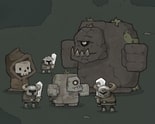
The Wizard in Right Click to Necromance does not show up when most players expect it to. It sits at the far end of the shop list with a bone cost that looks almost like a typo the first time you see it, and reaching that number is the actual mid-game wall here, not a hidden boss fight or a timed event. The game never dresses this up; it just puts a number in front of you and lets the grind speak for itself.
| Genre | Incremental clicker, simulation |
| Core Loop | Click to earn bones, spend bones on undead units, let units generate bones passively |
| Currency | Bones |
| Named Units | Digger, Warrior, Wizard |
Clicking for Bones Before the Digger Changes Everything in Right Click to Necromance
Right Click to Necromance opens with a bare graveyard scene and a prompt telling you to click until you have five bones. That is the entire tutorial. There is no map or dialogue, and the game trusts the loop to explain itself. Once you have enough bones, the next prompt nudges you toward an item that doubles click speed.
The Digger is the first real purchase, priced low enough that almost anyone reaches it within a minute of clicking. It is not impressive next to later units, but it is the piece that turns the game from clicking into an idle one, since it generates bones while your cursor is elsewhere.
New players tend to make the same early mistake: they keep clicking manually long after the Digger has made manual clicking the slower option. The math only works once you stop treating the mouse as the main bone source and start treating it as a top-up on whatever your units are already producing in the background.
The Warrior and the Bones-Per-Second Shift
Once bones climb into the hundreds, the Warrior becomes the next decision point. At five hundred bones it is a meaningfully bigger commitment than the Digger, and buying one too early, before passive income can absorb the cost, can stall a run longer than it needed to. There is no game over screen for this; it just slows you down quietly.
What the Warrior really represents is the first test of patience versus impulse. Some players buy the moment they can afford it; others wait until the purchase barely dents their bone total, trading a slower unlock for a smoother climb. There is a specific moment players talk about when the Warrior clicks into place: the bones-per-second figure jumps noticeably, and for the first time the graveyard genuinely feels like it is working without you.
Why the Wizard Feels So Far Away
The Wizard sits at twenty-five thousand bones, a jump large enough that reaching it changes how you think about every earlier purchase. Costs escalate fast once mid-tier upgrades are unlocked, and by the time prices are listed in the tens of thousands, the gap between a well-timed Warrior purchase and an impulsive one has already compounded.
This is also where the game earns its most common criticism: players who enjoy the early clicking rhythm sometimes find the stretch before the Wizard drags, since the number climbs faster than the visible feedback does.
Once the Wizard is finally bought, the payoff is less a dramatic visual change and more the bone curve bending sharply upward. Long-time players generally agree the wait is worth it, since nothing here adds filler to bridge the gap; the grind itself is the content, and the Wizard is the reward for sticking with it.
Resetting a Run in Right Click to Necromance Without Losing the Point
A restart option sits within easy reach at all times, and it matters more than it looks like it should. Because bone costs scale so aggressively, a run with poorly timed early purchases can end up meaningfully slower than a clean restart, and experienced players treat the button less as a failure state and more as a planning tool.
Players chasing efficient runs often reset the moment they notice a Digger or Warrior was bought later than it should have been, rather than dragging a suboptimal pace out. Casual players tend to ignore the restart entirely and let the graveyard grow at whatever pace their clicking habits produce, a perfectly reasonable way to play if speed was never the point.
A few habits separate a fast climb from a slow one:
- Buying the Digger the moment five bones are available instead of clicking past it.
- Letting passive bone generation catch up before committing to the Warrior.
- Resetting early rather than dragging out a run with poor purchase timing.
- Watching the bones-per-second figure instead of the raw bone total when deciding what to buy next.
Right Click to Necromance stays interesting for exactly as long as the bone curve keeps moving, and for most players that means a handful of restarts, a graveyard that slowly fills with Diggers, Warriors, and eventually a Wizard, and the small satisfaction of watching a number climb faster than it did the run before.
Comments
There are no reviews yet. Be the first one to write one.