

Featured Games

Few genres reward patience and pattern recognition the way puzzle games do. Instead of reflexes or quick clicks, they ask players to slow down, observe a layout, and figure out the one sequence of moves that untangles it. That shift in pace is exactly why so many people return to this category during a short break or a long commute.
At the core of every puzzle title sits a single idea: a problem with a hidden solution that becomes obvious only after enough trial and observation. Whether the format is a grid, a physics-based contraption, or a stack of falling shapes, the player’s job is to spot the underlying logic. Unlike action-driven titles, success here rarely depends on timing alone — it depends on reading the board correctly.
Developers reuse a handful of proven mechanics because they scale well across difficulty levels. Some of the most frequent include:
These mechanics can be combined, which is how a single studio manages to produce dozens of variations from one basic template.
A well-built puzzle collection doesn’t throw the hardest level at you first. Early stages usually teach one rule at a time, then later stages combine several rules at once, forcing the player to apply everything learned so far. This gradual layering is what separates a satisfying difficulty curve from one that feels random or unfair. Titles that skip this staging tend to lose players quickly, since frustration without a clear cause discourages continued play.
Spending time with this category isn’t just a way to pass minutes — it engages specific cognitive processes:
Because these skills transfer across many different formats, someone comfortable with one style of logic challenge often adapts quickly to a new one.
Not every entry in this genre demands the same commitment. Some are built around short sessions with a built-in move or time limit, making them easy to fit into a five-minute gap. Others are designed as long-form campaigns with hundreds of hand-crafted stages meant to be worked through over weeks. Readers browsing a catalog on GameVault will notice this split reflected in how titles are grouped, which makes it easier to filter by session length rather than scrolling through everything at once.
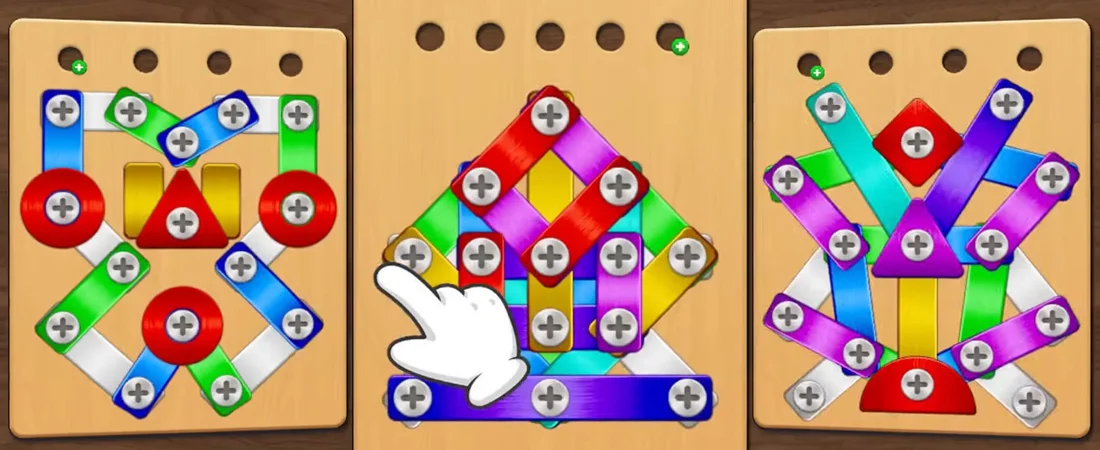
Because the entire challenge lives on the board itself, visual clarity matters more here than in almost any other category. Cluttered icons or low-contrast tiles can turn an otherwise solvable stage into a guessing exercise. The strongest designs use distinct shapes and colors so that a solution can be worked out by eye rather than by trial and error caused by visual confusion.
Ultimately, this category holds up because the reward comes from the player’s own reasoning rather than from luck or reaction speed. That sense of having earned the solution is what keeps people returning to a new set of levels long after the first stage has been cleared.