




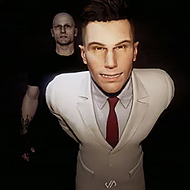

The Happyhills Homicide



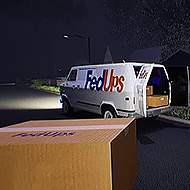
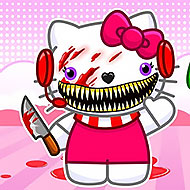

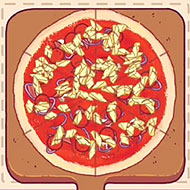





You pick up the phone, a client is panicking about noises coming from inside the walls, and The Happyhills Homicide drops you into the job before you have even finished writing down the address. There is no tutorial walking you through what to do next; you just start clicking around the house, picking things up, and hoping one of them matters.
| Genre | Horror, Puzzle |
| Setting | A string of haunted client houses |
| Controls | Left-click to move, interact, or use an item; right-click to throw |
| Structure | Item-based progression, no traditional puzzles |
Rocky, the Bone on a String, and Why The Happyhills Homicide Makes You Care First
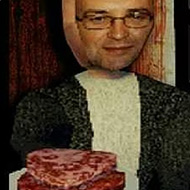
Before the scares pile up, The Happyhills Homicide spends real time letting you get attached to Rocky, a pug who tags along on calls; getting him to follow is its own small mechanic: dangle a bone on a string and he trots after it, which sounds silly but becomes the emotional glue holding the middle stretch together.
Players expecting a straight horror-comedy romp usually mention Rocky first when talking about what stuck with them. He is not just set dressing; he sniffs out clues in a couple of rooms, and the game leans on that bond later in ways many players did not see coming. That is deliberate pacing, not filler, since the bone-on-a-string moment is meant to feel low-stakes and goofy so later beats land harder.
The Proton Pack and Ghost Trap: How The Happyhills Homicide Solves a Case
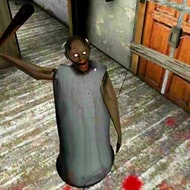
Combat and puzzle-solving blur together here. Once a beast shows up, you manage tools in real time rather than solving a logic puzzle: a proton pack for pushing it back, and a ghost trap that only works if placement is right. Fumble the setup and the beast resets, forcing another attempt.
What you carry between houses stays fairly consistent even as the problem changes:
- The proton pack, used to weaken or repel the beast directly.
- The ghost trap, which needs correct placement before it will catch anything.
- Whatever item the current house’s client call points you toward.
- Small evidence pickups that explain what happened in that particular house.
New players tend to assume a hidden logic puzzle sits behind every locked door, and that is the most common wrong turn early on. There really are no traditional puzzles, just objects that make sense once you have picked up the one thing that unlocks them.
Baiting the Beast With Food Left in the Kitchen
One trick players discover on their own, since the game does not spell it out, is that food left in the kitchen draws the beast toward that room. Once you know this, encounters change shape: instead of chasing a beast blind, you pull it somewhere you have already prepped a trap.
This is the kind of detail that only clicks from playing rather than reading about it; the first time the beast abandons whatever it was doing to beeline for a plate of food on a counter, it reframes every earlier room as a puzzle you had the pieces for all along. By the time you reach a house with more than one active threat, food-baiting stops being a neat trick and becomes close to mandatory.
The Scripture Cleaning Job’s Light Switch Trick
One client call, a scripture cleaning job, hinges on a light switch most players miss on a first pass. The room behaves differently depending on whether the lights are on or off, and figuring that out without a hint is the closest the game gets to a genuine lightbulb moment rather than a scripted scare.
Community discussion here tends to split. Some players enjoy that nothing is explained and treat the light switch as a satisfying discovery. Others find the pacing noticeably slower than earlier houses, with animations that drag a beat too long, and that complaint comes up often enough to count as honest criticism.
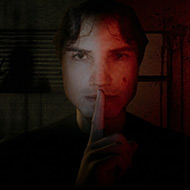
A screamer warning shown before this stretch tips off anyone paying attention, though plenty of players skip past it and get caught off guard anyway.
- Does The Happyhills Homicide have real puzzles? Not in the item-combination sense most point-and-click games rely on. Progress comes from finding the one object a scene needs, whether that is the bone on a string, a properly placed ghost trap, or food used to lure the beast.
- What happens to Rocky? Without spoiling the exact beat, his arc takes a hard turn late in the game that many players describe as the moment the tone shifts for good, and it remains one of the most debated turns in the whole game.
- Are there jump scares? Yes, and a screamer warning appears ahead of at least one sequence, though the bigger scares come from tone and timing rather than a single loud moment.
The Happyhills Homicide earns its reputation less from any single scare and more from how it sequences a bone on a string, a proton pack, and a plate of food left out as bait into one escalating night of house calls. Rocky is the detail that makes the rest of it hurt.
Comments
There are no reviews yet. Be the first one to write one.