











Good Pizza, Great Pizza













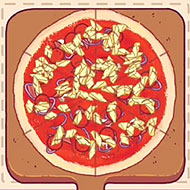
You’ve just signed the lease on a pizzeria across the street from Alessandro Alicante’s shop. There’s one oven, a block of dough, and a customer already tapping a foot outside the window in Good Pizza, Great Pizza.
| Genre | Restaurant management simulation |
| Setting | Pizza City |
| Player Role | Owner of a new pizzeria across from Alicante’s Pizza |
| Story Chapters | 5 |
There’s no tutorial walking you through the whole shop before the first order lands. You learn dough, sauce, and toppings the same way every player does — by fumbling the first pizza and watching a customer’s face fall.
Building a Pizza from Dough to Delivery in Good Pizza, Great Pizza
The core loop never really changes across the game’s five chapters, even as everything around it gets more complicated. Every order runs through the same physical steps, and the game expects you to get faster at each one without ever explaining a shortcut out loud.
- Stretch and shape the dough on the counter
- Spread the sauce evenly across the base
- Add cheese and the requested toppings
- Slide the pizza into the oven and bake it
- Slice, box, and hand it across the counter
None of it is hard in isolation. What makes the loop demanding is doing all five steps correctly while a line of customers behind the first one is already losing patience.
Reading What Each Customer Actually Wants
Orders aren’t handed to you as a clean checklist. Toppings sit unlabeled in a row along the counter, and as more of them unlock, remembering which pile is pepperoni and which is olives becomes a real skill rather than a formality. Community guides settle on eighteen toppings as the target for a pizza that draws no complaints, with twelve treated as the rough floor before customers start pushing back.
Spreading sauce and cheese evenly matters just as much as hitting the right count. A lopsided pizza with the correct toppings can still get docked, which catches new players off guard the first time a technically correct order still earns a bad tip. Players who prefer a slower, careful pace tend to stick closer to twelve toppings, trading tip size for fewer mistakes.
- Match the topping count the order specifies, not just the ingredients
- Spread sauce and cheese to the edges evenly
- Double-check special requests before boxing the pizza
By the time new ingredients like eggplant start showing up on the counter, the topping row gets crowded enough that scanning by memory becomes the real challenge, more than the baking itself.
Alessandro Alicante and the Rivalry Across the Street
Alessandro Alicante runs the popular pizzeria directly across from yours, and he’s not shy about reminding you of it. He’s a constant presence across all five chapters, and the rivalry gives the otherwise repetitive counter work a reason to keep escalating.
He’s also more than a one-note antagonist by the later chapters. Alicante has a daughter he clearly adores, with her dance trophy displayed at his pizzeria, and a Mother’s Day storyline built around the family leans on her bond with her grandmother rather than any absent parent.
She has a favorite order too — a Classic Meat pizza. Regulars of the game recognize the request the moment it appears on the counter, since it ties back to a character most players only know through Alicante’s side of the story.
The Cost of Asking Questions in Good Pizza, Great Pizza
Every customer arrives with a patience bar, and it drains the moment they start waiting. What surprises a lot of new players is that clarifying an order costs patience too — asking a customer to repeat or confirm what they want burns ten percent of their patience bar per question, which means guessing wrong is sometimes cheaper than asking twice.
That mechanic turns the game into more of a memory test than a simple assembly line. Reading an order fast and correctly the first time is worth more than being cautious about it.
Losing customers to patience isn’t just a missed tip, either. Walk-outs stack up against your day’s performance, and early on, a couple of impatient customers in a row can wreck an otherwise clean shift.
The Recipe Book and the House Special
Chapter 4 hands you the Recipe Book, a running log of every combination you’ve already made correctly. With it comes the ability to design a House Special — a custom pizza built from whatever ingredients you’ve unlocked by that point, and once it’s saved, that recipe earns a twenty percent tip bonus every time a customer orders it by name.
It’s a small addition that changes how later chapters feel. Instead of just reacting to orders, you’re building something that belongs to your shop specifically, distinct from anything on Alicante’s menu.
Most players don’t unlock a House Special worth using until they’ve already got a wide topping selection. The payoff arrives well after the mechanic itself does, which is a common point of mild frustration in early reviews.
Rush Hour and the Chaos It Brings
Rush Hour is a scripted two-minute event where customers show up with roughly a third of their normal patience, but the conveyor and your own hands move faster too, and tips are noticeably more generous. It’s the closest the game gets to an arcade-style panic mode.
Once Rush Hour appears, a slow, careful playstyle stops working entirely. The whole approach has to shift toward pattern recognition and speed over precision. Achievement hunters chasing diamonds tend to love Rush Hour’s generous tips, since diamonds are otherwise only earned through small side-quests and milestones.
Not everyone loves the shift, though. It’s one of the more debated parts of Good Pizza, Great Pizza — some players enjoy the adrenaline, while others feel it clashes with the otherwise cozy tone of running a small pizzeria.
The Regulars Who Remember You
Two recurring homeless customers show up periodically to ask for a pizza at no charge, and how you respond actually matters. Help them enough times and they return later to assist the shop in small ways instead of just asking for handouts.
With more than a hundred distinct customers cycling through the counter, most of the cast is one-off, which makes the ones who do return stand out immediately. Completionist players who make a point of remembering every regular are usually the first to notice when these two stop asking and start helping instead.
It’s a quiet reminder that underneath all the topping math, the writing is still trying to make the counter feel lived-in. Even with a hundred-plus customers rotating through a single shop, a handful of them are built to be remembered.
How many toppings should go on a pizza in Good Pizza, Great Pizza?
Community guides generally treat eighteen toppings as the sweet spot for orders without extra requests. Twelve is considered close to the minimum before customers start docking the tip for a thin-looking pizza.
What happens if you ask too many questions when taking an order?
Each clarifying question costs the customer ten percent of their patience bar. Repeatedly asking to confirm details can cause a walk-out even if the pizza itself would have been made correctly.
How do you unlock the House Special recipe?
The House Special becomes available in Chapter 4 after a short tutorial from Alicante. It lets you save a custom topping combination to the Recipe Book that earns a twenty percent tip bonus whenever a customer requests it.
Good Pizza, Great Pizza turns a simple premise — beat the pizzeria across the street — into a genuinely demanding memory and timing game. By the time Rush Hour is interrupting a quiet afternoon shift, Alessandro Alicante’s rivalry feels less like flavor text and more like the whole reason to keep the counter clean.
Comments
There are no reviews yet. Be the first one to write one.