















Five Nights at Freddy’s 3



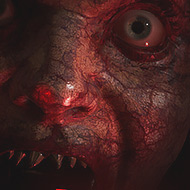

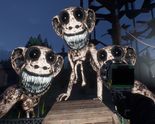







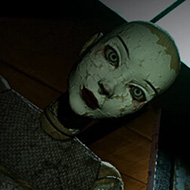
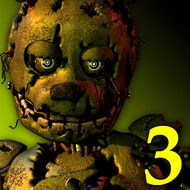
Thirty years pass between the first pizzeria closing its doors and the night you clock in at Fazbear’s Fright, and that single detail sets the tone for everything Five Nights at Freddy’s 3 does differently from the games before it. You are not guarding four separate animatronics anymore. You are guarding against one: Springtrap, a suit so old and rusted that the thing wearing it barely counts as a robot anymore.
| Genre | Point-and-click Horror Survival |
| Setting | Fazbear’s Fright: The Horror Attraction |
| Main Threat | Springtrap |
| Nights | Six, plus a Nightmare mode |
A Horror Attraction Built From What Survived the Fire
The owners of Fazbear’s Fright went looking for anything that could make their attraction feel authentic, and what they found still had something inside it. Five Nights at Freddy’s 3 puts you behind the desk of that attraction overnight, watching security cameras while one functioning animatronic wanders the halls looking for the office.
The core loop is simple to describe and hard to execute cleanly: check the cameras, track where Springtrap is moving, and reboot whichever system fails before it costs you your sight or your hearing. There is no door to slam this time, just cameras, audio, and ventilation that all need constant attention.
What surprises new players most is how quiet the early minutes are. Nothing moves for the first stretch of Night 1, and that silence trains you to trust the cameras rather than panic at every audio glitch.
Springtrap Is the Only Thing in Five Nights at Freddy’s 3 That Can Kill You
Springtrap becomes active from Night 2 onward, and he is the sole animatronic capable of ending your night for real. He moves through the building room by room, and if a camera shows him adjacent to a vent, he can use it to close the distance faster than his walking pace suggests.
He is also, by design, not especially clever. Springtrap responds to sound more than anything else, which is why the audio devices scattered through the building exist. Play a burst of BB’s laugh in a room near his position and there is a good chance he shuffles toward it instead of your office, buying you a window to reboot whatever system just failed.
That audio lure is not foolproof. Springtrap ignores the sound roughly one time in seven, so a lure you were counting on can simply fail, and by the time you notice he never moved, he might already be closer to the office than the cameras suggested.
Phantom Animatronics That Cannot Kill You But Will Ruin Your Night
Alongside Springtrap, Five Nights at Freddy’s 3 throws burned, broken hallucinations of the old cast at you: Phantom Freddy, Phantom Chica, Phantom Foxy, Phantom Puppet, Phantom BB, and Phantom Mangle. None can end your night the way Springtrap can. Instead they jumpscare you hard enough to disable a system on the spot, usually the ventilation, then vanish in a flash of white light.
The real danger of a phantom is timing, not the jumpscare. Getting hit by Phantom Chica mid-reboot means two systems down at once, and Springtrap does not pause his approach while you scramble to fix either.
By the time Phantom Puppet starts appearing directly in the office, most players treat any unexpected flicker as a reason to check the maintenance panel immediately.
The Maintenance Panel Beginners Ignore Too Long
The maintenance panel sits on the far-left side of the office, and it is where every system failure gets fixed: audio, camera feed, and ventilation, individually or all at once. New players consistently leave the panel closed too long, trying to push through with a flickering camera instead of stopping to reset it.
That hesitation is costly. Once ventilation goes offline, the office flashes red and your vision fades in and out, making it harder to notice Springtrap standing in the doorway. Rebooting early is the difference between a clean recovery and a jump scare you never saw coming.
Audio devices punish hoarding too: the number of uses drops as nights progress, falling to just two charges by Night 5. Spending a lure carelessly on Night 2 barely matters, but treating Night 5 the same way leaves nothing in reserve.
How the Six Nights of Five Nights at Freddy’s 3 Escalate
Each night raises the stakes in a specific, learnable way rather than adding pure randomness. Understanding that escalation separates a player who reaches Night 6 from one stuck retrying Night 4.
- Night 1 through Night 2: Springtrap activates and patrols, systems fail rarely enough to feel manageable
- Night 3 through Night 4: phantom appearances get frequent enough that juggling two failing systems becomes routine
- Night 5: audio charges shrink to two uses, forcing genuine rationing of your one reliable Springtrap deterrent
- Night 6: due to a known quirk in how the night was built, ventilation failures stop triggering on their own
That Night 6 quirk is one of the most-discussed details in the community, since it runs against the instinct that later nights should always be harder. Casual players sweep the cameras in the same order every time, wasting seconds checking rooms Springtrap has no reasonable way of reaching yet, while stronger players build a mental map of adjacent vents and only check rooms that actually connect to wherever he was last seen.
The Follow Me Minigames Hiding the Real Story
Scattered between nights are short, deliberately crude minigames that speedrunners skip and story fans consider the actual point of playing. They follow a dead child through the original pizzeria, and by Night 5’s minigame, the story shows the five missing children’s souls cornering Purple Guy inside the same suit players have been fleeing all game.
- Skipping every minigame still lets you finish the main nights and reach the neutral ending
- Completing every minigame’s hidden objective unlocks a calmer final screen instead of the newspaper report that the attraction burned down
- The minigames are the only place in Five Nights at Freddy’s 3 where you play as something other than a night guard
Whether the minigames are worth pausing for is a debated part of the community’s relationship with this entry, since they interrupt the tension of a run for slow, low-resolution scenes some players find genuinely unsettling and others find like padding.
What Players Still Argue About
The most honest criticism leveled at Five Nights at Freddy’s 3 is that it plays easier than the games before it, since one predictable threat trades raw difficulty for atmosphere and story. Reviewers at the time gave it solid but not glowing scores, generally in the low seventies out of a hundred, praising the mechanical polish while missing the character variety of the earlier settings.
Community vocabulary leans on shorthand: players talk about “phantoms” rather than hallucinations and debate whether the Night 6 quirk should even count as intended design. None of that means much without sitting through a night watching the cameras yourself.
Frequently Asked Questions
Why does Springtrap sometimes ignore the audio lure in Five Nights at Freddy’s 3?
Springtrap has roughly a one-in-seven chance of ignoring an audio device entirely, since his AI is designed to be somewhat unpredictable. That randomness is intentional, and experienced players keep a second plan ready rather than betting the night on one lure working.
What actually happens if the ventilation system fails and you do not fix it?
The office starts flashing red and your vision fades in and out repeatedly, making it much harder to spot Springtrap if he reaches the doorway. It does not end the night by itself, but it raises the odds you miss him closing in while the screen is dimmed.
How do you unlock the good ending in Five Nights at Freddy’s 3?
You need to find and complete the hidden objective inside each Follow Me minigame across all six nights, commonly called the cake endings. Finishing them replaces the standard newspaper ending, where the attraction burns down, with a calmer final scene showing the children’s souls at rest.
Five Nights at Freddy’s 3 earns its place in the horror lineup not through variety of enemies but through the slow dread of watching one broken animatronic named Springtrap learn your habits over six nights. The maintenance panel and that strange Night 6 quirk are the details that stick with anyone who sat through a full run rather than just watching someone else survive one.
Comments
There are no reviews yet. Be the first one to write one.