














Cursed Meal













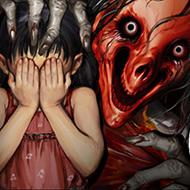
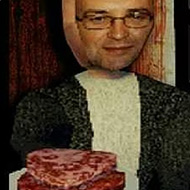
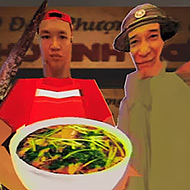
You take a new job at a small church, and the priest who greets you is kind in a way that’s just slightly too eager to be comfortable. That single, quiet wrongness is where Cursed Meal starts, long before anything in the halls actually moves.
Cursed Meal Starts Ordinary on Purpose
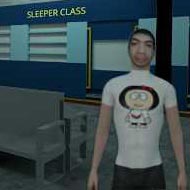
Cursed Meal opens with empty halls and a suspiciously kind priest, and most of the early runtime is spent simply learning the church’s daily schedule by walking its grounds. Nothing jumps out immediately — the game wants you settled into the routine before anything about it stops making sense.
Strange meals left around the property are the first real crack in that ordinary surface, small enough to dismiss at first and impossible to ignore by the second time you notice one.
In Cursed Meal, Pews and Closets Are Your Only Real Defense
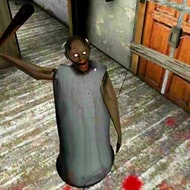
Once the cursed entity starts roaming, most of a run comes down to crouching behind pews or hiding in closets while it moves through the church on a loose patrol pattern. There’s no combat to fall back on — avoidance is the entire toolkit, and the patrol pattern’s looseness means memorizing a fixed route doesn’t fully protect you.
- Flashlight batteries: scavenged around the church, necessary for seeing in the church’s darker halls.
- Matchsticks: another scavenged resource tied to navigating the darker areas.
- Audio diaries: found around the grounds, piecing together the priest’s troubled past.
The Story Never Explains Itself Out Loud
Cursed Meal keeps dialogue minimal and lets environmental clues carry almost the entire narrative — the audio diaries and the state of the church itself do the storytelling that a more conventional horror game might hand to a cutscene. A roughly 45-minute playthrough means most of that runtime goes to wandering and noticing, not scripted exposition.
Do I need to fight the cursed entity at any point?
No — Cursed Meal has no combat system, so pews and closets are the actual answer to being pursued, not a weapon or a chase-ending confrontation.
What are the strange meals actually for?
The game never states it outright — they’re one of the environmental details meant to raise concern early, with the full context only becoming clear as audio diaries fill in the priest’s past.
The detail that stays with most players after Cursed Meal isn’t the cursed entity itself — it’s the priest’s kindness at the very start, which reads completely differently once the audio diaries have filled in what he’s actually been hiding.
Comments
There are no reviews yet. Be the first one to write one.