







Meccha Chameleon
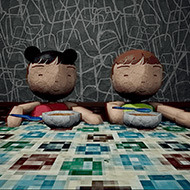
Family Secrets 1: Empty Plate looks like a quiet story about looking after a little brother for a few days. It plays like one too, right up until the ordinary parts of that routine stop feeling ordinary.
Family Secrets 1: Empty Plate Keeps Miko’s Job Small on Purpose
You play as Miko, left in charge of younger sibling Jun after their mother has to leave for work for several days. There’s no combat, no weapon collection, no upgrade tree, and no score — just WASD movement, E to interact or skip dialogue, F to toggle the flashlight, and ESC to pause. The entire game is built from that small control set.
Because the mechanics are so minimal, almost everything the game communicates comes through what you notice while exploring the house rather than through any system explaining it to you directly.
In Family Secrets 1: Empty Plate, the House Doesn’t Stay Comfortable for Long
Checking objects, exploring rooms, and triggering the next story beat is the entire structure of Family Secrets 1: Empty Plate, and at around 30 to 40 minutes long, it’s built as one continuous read rather than a game meant to be replayed for variety. Players expecting a jump-scare-driven horror game tend to be caught off guard by how much of the tension comes from an ordinary domestic setup slowly stopping feeling ordinary, rather than from anything chasing you outright.
Do I need to protect Jun directly during the game?
The core loop is built around movement, observation, and interaction rather than direct protection mechanics — there’s no combat system standing between Miko and anything in the house.
What makes Family Secrets 1: Empty Plate work isn’t a single scare — it’s watching an evening of looking after Jun quietly stop looking like an ordinary evening, one small noticed detail at a time.
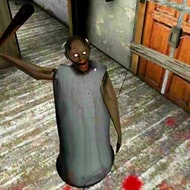
You’ve barely learned to move quietly past Granny when a cane taps against the floor from a completely different direction, and you realize this house has a second set of ears listening for you. Granny: Chapter Two doubles the original’s core threat instead of just reskinning the house around it.
Granny: Chapter Two Means Two Captors, Not One
Where the original game asked you to manage one hunter, Granny: Chapter Two adds Grandpa, who carries a cane and hits the player with it when caught, alongside Granny and her baseball bat. The two don’t behave identically — learning Granny’s patrol habits doesn’t tell you much about where Grandpa tends to linger, so early runs often go wrong because a player is still thinking in single-threat terms from the first game.
Granny also interacts with more of the house itself this time — the piano, the sink, a dirty plate, and the shower doors are all things she can engage with, which changes how safe certain rooms feel compared to the original.
Three Routes Instead of Two
The sequel expands escape options to three routes, adding a helicopter and a boat alongside the returning gate-style exit. Each route pulls from a different part of the house for its required items, which spreads exploration out more than the original game’s tighter item chain did.
- Helicopter route: a newly added escape option not present in the original house.
- Boat route: a second new option, pulling from a different section of the map than the helicopter path.
Picking a route early and committing to its item requirements tends to work better than gathering everything and deciding at the end, since some tools only matter for one specific path.
Slendrina’s Presence Is a Warning Sign, Not a Cameo
Slendrina’s child appears in a specific room, and her head briefly appears above the child if it’s killed. Slendrina herself shows up faintly in some of the house’s paintings. None of this is decoration — rooms connected to Slendrina tend to be ones where extra caution matters, since they signal the house isn’t only Granny and Grandpa’s territory.
Red Eyes Mode Changes the Entire Chase
If the great grandson is killed while Granny is still alive, using either the Shotgun or the Stun Gun, her eyes turn red. She enters the same red-eyed state in response to Slendrina’s screams elsewhere in the house. Once triggered, Granny becomes constantly aware of the player’s location rather than searching normally, which turns the rest of the run into straightforward evasion instead of the usual stealth-and-search loop.
Players who’ve cleared the original game sometimes trigger this by accident on a first Chapter Two run, not realizing certain items or encounters carry this consequence.
Is Granny: Chapter Two harder than the original Granny?
Most players find it harder, mainly because two active hunters with different habits, plus a wider item chain across three escape routes, demands more situational awareness than tracking one hunter ever did.
What happens if I trigger red eyes mode by accident?
Granny becomes permanently aware of your location instead of searching normally, which makes the rest of that run considerably more about evasion than stealth.
What separates Granny: Chapter Two from a simple reskin is that moment Grandpa’s cane taps somewhere you didn’t expect — it’s the instant every habit built from the first house has to be relearned for a second one.