










Recipes Guide
You’ve got a kettle going, a passenger waiting with a specific request, and a train that just pulled in and is about to unload a dozen more. Every shift at Fakripur station in Railway Chai Wala starts this way, and the entire service side of the game is built around keeping that rhythm from breaking down. As Ramu, the station’s resident chaiwala, your job is deceptively simple on paper — brew, fry, pour, repeat — but the game’s first-person perspective and steady stream of arrivals turn that simple job into the real test of the free-to-play experience.
| Item | Type |
| Chai | Brewed beverage, made to order |
| Coffee | Brewed beverage, made to order |
| Samosas | Prepared snack |
| Vada Pav | Prepared snack |
| Kokila Kola | Served cold beverage |
Brewing Chai and Coffee Is the Skill the Game Actually Tests
Railway Chai Wala frames chai and coffee as the two beverages that reward doing the process right rather than just clicking through it. The game plays from a first-person perspective, and the brewing interactions lean on the same close, hands-on style as the rest of the station work — you’re not managing brewing from a menu, you’re standing at the stall doing it.
Because passengers arrive in bursts whenever a train pulls in, the real pressure isn’t the brewing motion itself but doing it accurately while a queue is already forming. Treating every order as identical is the fastest way to fall behind once Fakripur station gets busy. A quiet platform with two or three passengers is forgiving; a platform that’s just absorbed a full train is where sloppy brewing habits actually cost you.
Coffee and chai aren’t interchangeable from the game’s perspective — they’re presented as separate, named drinks with their own preparation, and mixing up which one a passenger actually asked for is one of the more basic mistakes new players make early on. Because both drinks are brewed to order rather than batch-prepared, there’s no way to stockpile a buffer of chai for a rush the way you might in a more conventional cooking sim — every cup gets made when it’s asked for, which keeps the pressure tied directly to whoever is standing in front of the counter.
Building a habit of confirming the order before you start brewing — chai or coffee, nothing more complicated than that distinction — is the single most reliable way to avoid the kind of small mistake that snowballs once a second train arrives before you’ve cleared the first queue.
Samosas, Vada Pav, and Kokila Kola Round Out Railway Chai Wala’s Stall
Beyond the two beverages, Railway Chai Wala has you frying samosas, preparing vada pav, and pouring chilled Kokila Kola for passengers who want something besides a hot drink. Each of these exists as its own confirmed item on the stall’s menu, not a generic “snack” catch-all, which matters once a passenger’s request gets specific.
Samosas and vada pav both belong to the prepared-snack category, meaning they demand active hands-on work at the stall rather than a quick pour — frying takes time and attention, and a passenger who orders one and gets handed the other is being served the wrong item just as surely as someone who ordered coffee and got chai. Treating the two fried snacks as interchangeable “quick food” is a mistake that costs accuracy even though both come from the same general station of the stall.
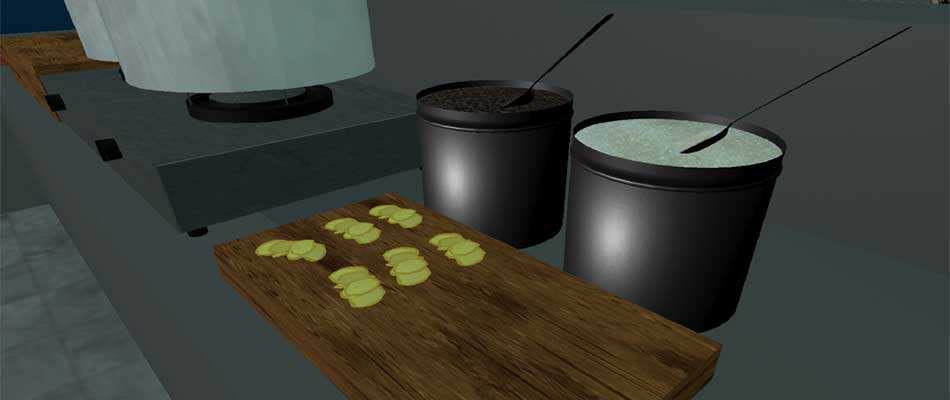
Kokila Kola in particular stands out as the one cold, ready-to-serve item among the three — it doesn’t demand the same hands-on preparation that samosas and vada pav do, making it the quicker order to fill when a train is unloading and the queue at Fakripur station is growing fast. Because it’s the fastest item on the whole menu to fill, Kokila Kola functions almost like a pressure valve during the busiest stretches of a shift: clearing cola orders first, when several arrive at once alongside food and drink requests, buys you time to give chai, coffee, samosas, and vada pav the attention their preparation actually needs.
Reading the Rush: How Trains Set the Pace of Every Shift
The five menu items don’t exist in a vacuum — they’re paced by the trains pulling into Fakripur station. A single passenger trickling up to the counter is a very different situation from a full carriage emptying onto the platform at once, and Railway Chai Wala’s difficulty curve is really a difficulty curve built around that unloading rhythm rather than around the recipes themselves getting harder.
A workable approach to a busy shift is to triage by preparation time rather than by order of arrival: fill Kokila Kola requests first since they cost almost no time, follow with whichever brewed beverage — chai or coffee — is next in the queue, and treat samosas and vada pav as the orders that need a buffer built around them, since frying can’t be rushed the way pouring a cold drink can. Falling into the trap of serving strictly first-come-first-served during a full-train rush is one of the more common ways a shift starts to unravel at Fakripur station.
Why Passenger Requests Change What Counts as a Good Shift
Railway Chai Wala doesn’t treat passengers as an interchangeable line of customers — the game is tagged as story-driven and leans on interactive-fiction-style conversation, meaning who you’re serving carries more weight than in a typical order-and-serve simulator. A colorful cast of passengers means recognizing what a specific person actually wants matters as much as executing the brewing or frying correctly.
This is also where the station’s quieter unease starts to show through the ordinary service loop — some passengers come across as eerie or off in ways a purely mechanical order-taker would miss entirely, which is part of what separates Railway Chai Wala from a straightforward time-management stall game. Getting an order right isn’t just about clearing the queue efficiently; it’s also the mechanism through which the game’s mystery layer feeds you information, since a passenger’s exact request, phrasing, or reaction to what Ramu hands them can carry more weight than it first appears.
Do chai and coffee require different preparation in Railway Chai Wala?
Yes — the game presents them as two distinct beverages with their own brewing process, not a single drink with a flavor toggle, so mixing up an order between them counts as a real mistake.
Is Kokila Kola faster to serve than the fried snacks?
Generally yes, since it’s a chilled, ready-to-pour item rather than something that needs active preparation the way samosas and vada pav do.
What’s the best order to fill requests when a train just unloaded at Fakripur station?
Clearing Kokila Kola orders first tends to work best, since they take almost no time, followed by chai and coffee, with samosas and vada pav given the extra preparation time they need rather than being rushed.
Can I get ahead by pre-making chai or coffee before passengers order?
No — both beverages are brewed to order in Railway Chai Wala, so there’s no batching or stockpiling; every cup is tied to the specific passenger asking for it.
The stall in Railway Chai Wala only really comes together once brewing chai and coffee, frying samosas and vada pav, and pouring Kokila Kola stop feeling like separate chores and start feeling like one continuous rhythm — which is exactly when the game starts asking you to notice the passengers standing in front of you, not just their orders.